Phobias, Symptoms, and Treatment Options

This guide provides a comprehensive overview of common and lesser-known phobias, including definitions, symptoms, and treatment options.
It is designed as a resource for:
Parents
Educators
- Therapists
- Individuals experiencing anxiety
- Phobias are one of the most common forms of anxiety, but they are also highly treatable with the right approach.
Licensed Professional Counselor PHD©| 35+ Years Experience
Quick Answer: What Is a Phobia?
A phobia is a strong, lasting fear of a specific object or situation. It is often much greater than the real danger and can lead to avoidance.
Unlike normal fear, phobias can interfere with daily life, relationships, and important activities.
Who is this guide for:
Parents
Teachers
School counselors
Individuals
What This Guide Covers
What phobias are (and how they differ from normal fear)
- A categorized list of common phobias
- Symptoms and causes
- Evidence-based treatment options
- When to seek professional help
- A-Z List Of Phobias PDF DownloadWhat Is a Phobia?
A phobia is a strong, lasting fear of a specific object, situation, or activity. It can cause avoidance and distress.
Unlike everyday fear, phobias:
-Are disproportionate to actual danger
-Interfere with daily functioning
-Often persist over time without treatment
How Common Are Phobias?
Specific phobias are among the most common anxiety disorders.
They can affect:
Children
Teens
- Adults
Many people live with phobias for years without realizing treatment is highly effective.
Categories of Phobias
Phobias are typically grouped into these categories:
1. Specific Phobias
Fear of a particular object or situation.
2. Social Phobia (Social Anxiety)
Fear of being judged or embarrassed in social situations.
3. Agoraphobia
Fear of situations where escape may be difficult.
Common Phobias List (With Definitions)
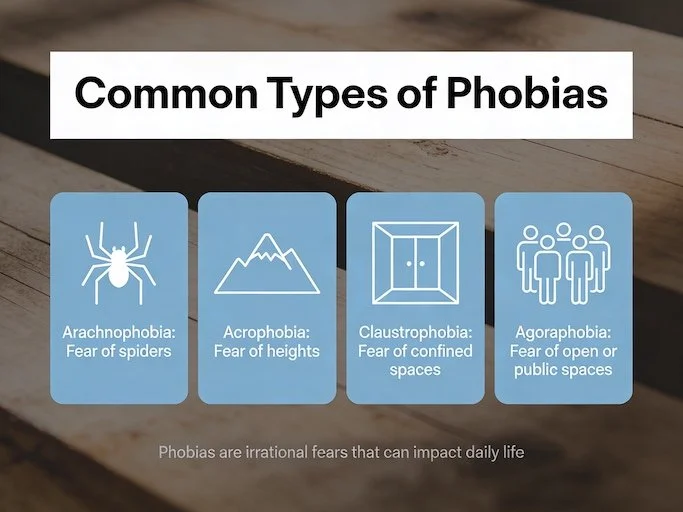
Below is a list of widely recognized phobias.
Situational Phobias
Fear of flying (Aviophobia)
Fear: Feeling nervous before flying
Phobia: Avoiding flights entirely, even when necessary
Fear of driving Fear Of Driving Over Bridges
- Fear of elevators (Claustrophobia-related)
- Fear of enclosed spaces (Claustrophobia)
- Common Phobias (With Symptoms)
Acrophobia (Fear of Heights)
Often includes dizziness, panic, and avoidance of high places such as balconies or bridges.
Arachnophobia (Fear of Spiders)
Can trigger immediate anxiety, even when the spider poses no real threat.
Aerophobia (Fear of Flying)
May involve panic symptoms before or during flights, leading to complete avoidance.
Claustrophobia (Fear of Enclosed Spaces)
Common in elevators, airplanes, or crowded rooms.
Trypanophobia (Fear of Needles)
Frequently associated with medical anxiety and avoidance of healthcare settings.
Animal Phobias - Arachnophobia (fear of spiders)
Common symptoms include panic, avoidance, and physical anxiety responses such as sweating or rapid heartbeat.
Fear of dogs (Cynophobia)
- Fear of snakes (Ophidiophobia)
Natural Environment Phobias
Fear of heights (Acrophobia)
Fear of water (Aquaphobia)
Fear of storms (Astraphobia)
Medical Phobias
Fear of needles (Trypanophobia)
Fear of blood (Hemophobia)
Fear of doctors
Social & Performance Phobias
Fear of public speaking
Fear of social judgment
Fear of embarrassment
100+ Phobias A–Z PDF Download
Symptoms of a Phobia
Phobias can trigger both emotional and physical symptoms:
Emotional Symptoms
Intense fear or panic
Urge to escape
Anticipatory anxiety
Physical Symptoms
Rapid heartbeat
Sweating
Shortness of breath
Dizziness
What Causes Phobias?
Phobias typically develop from a combination of factors:
1. Learned Experiences
A negative or traumatic event.
2. Observational Learning
Seeing others react fearfully.
3. Brain & Biological Factors
Heightened fear response in the brain.
4. Avoidance Reinforcement
Avoiding the fear strengthens it over time.
Evidence-Based Treatments for Phobias
The good news: phobias are highly treatable.
1. Cognitive Behavioral Therapy (CBT)
Helps individuals:
Identify distorted thoughts
Replace them with realistic ones
2. Exposure Therapy
Gradual exposure to the feared object or situation.
Considered one of the most effective treatments.
3. Hypnotherapy
Can help:
Access subconscious fear patterns
Reduce anxiety responses
4. Relaxation Techniques
Meditation For Anxiety and Stress
Including:
Deep breathing
Progressive muscle relaxation
Free Printable: Phobia Worksheet Pack
To make this guide practical, we’ve included free downloadable resources used by parents, educators, and therapists.
What’s Included:
Common Phobia Triggers
Identify patterns behind fear responses and situations that cause anxiety.
Symptom Tracker
Track physical and emotional symptoms over time to recognize patterns.
Exposure Progress Sheet
A structured tool for gradually facing fears and building confidence step by step.
Download the free worksheet pack (PDF) and start taking practical steps toward overcoming fear.
This resource may be shared for educational purposes with attribution.
Free printable resource used by parents, educators, and therapists
Free Printable: Phobia Symptoms, Triggers & Exposure Worksheet
To support parents, educators, and people dealing with anxiety, this guide includes a free printable worksheet. It is designed for real-world use.
What’s Included:
Common Phobia Triggers
Identify patterns behind fear responses, including:
Specific situations (flying, driving, enclosed spaces)
Environmental triggers (heights, storms, crowds)
Social or performance-based situations
Medical-related triggers (needles, doctors, blood)
Understanding triggers is the first step toward reducing anxiety.
Symptom Tracker
A simple, structured way to monitor:
Physical symptoms (heart rate, sweating, dizziness)
Emotional responses (fear, panic, avoidance)
Intensity levels over time
Tracking symptoms helps individuals recognize patterns and measure progress.
Exposure Progress Sheet
A step-by-step worksheet to support gradual exposure, including:
Breaking fears into manageable steps
Rating fear levels (1–10)
Tracking completed exposures
Reflecting on outcomes and confidence gains
This approach is based on evidence-backed techniques used in therapy to reduce phobia-related anxiety.
Who This Is For
This printable resource is commonly used by:
Parents supporting children with anxiety
School counselors and educators
Therapists and mental health professionals
Individuals working on overcoming specific fears
Why This Resource Helps
Phobias often persist due to avoidance. This worksheet provides a clear, structured way to:
Increase awareness of triggers
Track symptoms objectively
Build confidence through gradual exposure
Download the free Phobia Worksheet Pack (PDF) and start taking practical steps to reduce fear and anxiety.
When to Seek Professional Help
This resource may be shared for educational purposes with attribution.
Consider counseling if:
The phobia interferes with daily life
Avoidance limits opportunities
Panic symptoms are frequent
Early treatment can significantly improve quality of life.
Fear vs. Phobia: What’s the Difference?
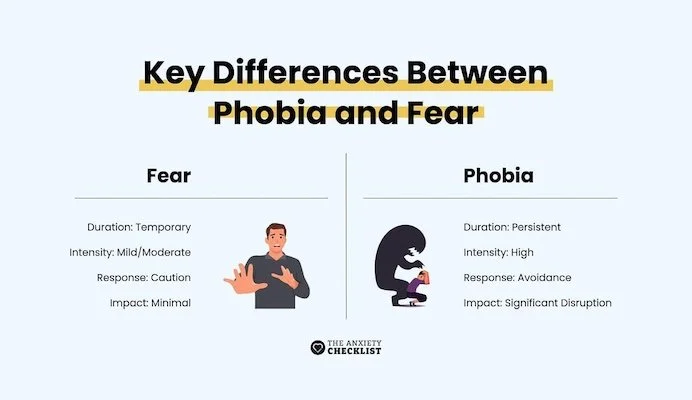
Fear vs Phobia
Many people use the terms fear and phobia interchangeably—but they are not the same. Understanding the difference can help you recognize when a normal reaction may require additional support.
What Is Fear?
Fear is a natural and protective emotional response to a real or perceived threat. It helps keep us safe by triggering a “fight or flight” response.
For example:
Feeling nervous before a big presentation
Being cautious around a dangerous situation
Experiencing unease in an unfamiliar environment
In most cases, fear is temporary and fades once the situation passes.
What Is a Phobia?
A phobia is an anxiety disorder. It causes intense and ongoing fear of a specific object or situation.
Unlike normal fear, a phobia:
Is out of proportion to the actual danger
Persists over time
Leads to avoidance behaviors
Can interfere with daily life
Real-Life Examples
Fear of flying: Feeling uneasy during turbulence
Phobia of flying: Avoiding air travel completely, even when necessary
Fear of dogs: Being cautious around unfamiliar dogs
Phobia of dogs: Experiencing panic at the sight of any dog
When Does Fear Become a Phobia?
A fear may be considered a phobia when it:
Interferes with work, school, or relationships
Causes intense physical symptoms (panic, dizziness, rapid heartbeat)
Leads to consistent avoidance
Persists for months or longer
Can Phobias Be Treated?
Yes—phobias are highly treatable.
Effective approaches include:
Cognitive Behavioral Therapy (CBT)
Gradual exposure techniques
Relaxation and coping strategies
With the right support, individuals can significantly reduce fear and regain confidence.
Fear is a normal part of life—but when it becomes overwhelming, persistent, and limiting, it may be more than just fear.
Recognizing the difference is the first step toward meaningful change.
If you’re struggling with anxiety or phobias, professional support can help you move forward with clarity and confidence.
Final Thoughts
Phobias can feel overwhelming—but they are also one of the most treatable mental health challenges.
With the right approach, individuals can reduce fear, build confidence, and regain control.
About the Author
Kelly Johnston is a Licensed Professional Counselor with over 30 years of experience helping clients overcome anxiety, phobias, trauma, and related challenges.
Phobia Counseling and Treatment Options
Often Cognitive Behavioural Therapy Is Beneficial to Treating Phobias and Fears
Hypnotherapy For Overcoming Phobias
Blog Category “Fears and Phobias” Published Article